

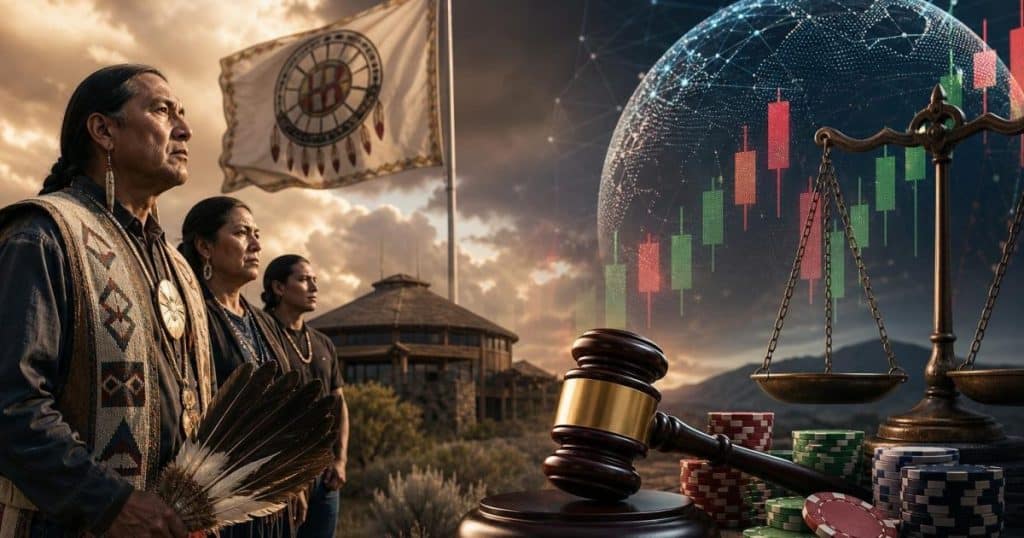
California’s tribal gaming leaders are increasingly alarmed by the rise of prediction markets, which they claim are siphoning off approximately 5% of nationwide tribal gaming revenue. Platforms like Kalshi and Polymarket are rapidly expanding in the sports event trading arena. Often dubbed the most promising untapped market, California has seen sluggish progress in legalizing sports betting due to tribal opposition against commercial sportsbooks’ initiatives. Tribes are now pivoting their strategy, taking these exchanges to court, arguing that their offerings amount to unlawful sports betting, flouting California’s gaming laws. This estimated impact stems from early findings by the California Nations Indian Gaming Association. Chairman James Siva highlighted to Tribal Business News that prediction markets are beginning to divert major funds away from tribal entities. “The rise of the prediction market is, without a doubt, the largest and most impending threat we have to tribal gaming,” Siva noted. “It’s arguably the biggest threat since the industry’s inception.”
In This News
Rapid Market Shifts Complicate Tribal Strategies
California tribes have long been bracing for legal sports betting, setting plans in motion even before the pandemic led to the failed 2022 initiative for legal wagering. But the swift ascent of prediction markets has accelerated these talks. According to Siva, the tribes initially found it challenging to quantify the financial bleed due to prediction markets’ brisk growth. However, initial studies indicate a tangible shift in revenue away from tribal casinos. This revelation has prompted tribes to adopt both defensive and anticipatory measures as these markets continue to gain popularity. In fiscal 2023 alone, tribal gaming raked in over $43 billion nationwide, underpinning essential government services such as public safety and education.
Legal and Regulatory Challenges Loom
Siva contends that prediction markets have tilted the competitive market by offering sports event contracts without adhering to California’s constitutional mandates or the established tribal-state compacts. Building the gaming industry required decades of regulatory framework development and consumer protection efforts by tribes. Letting prediction market operators bypass these hard-won processes, Siva argued, undermines tribal sovereignty and existing laws. The association is actively collaborating with California Attorney General Rob Bonta to counter legislation that only partially addresses prediction markets. From the association’s perspective, anything less than a complete ban could inadvertently legitimize these products.
Future Court Battles Likely
Looking ahead, Siva anticipates that this controversy is destined for the courtroom, with the potential to escalate to the U.S. Supreme Court. This view is widely shared among industry insiders. It’s a legal showdown that’s likely to set precedents affecting the future of gaming law. As it stands, the intricacies of this legal battle will continue to evolve, with major implications for the tribal gaming market. The next critical step will be watching how the courts interpret these emerging markets. And tribes are bracing for a longer legal journey, which could span years if federal courts get involved.

Marcus Chen brings a quantitative approach to poker strategy and sports betting analysis. With a background in data analytics and over eight years covering professional poker circuits, his articles combine statistical insights with practical advice for serious players looking to sharpen their edge at the table.