

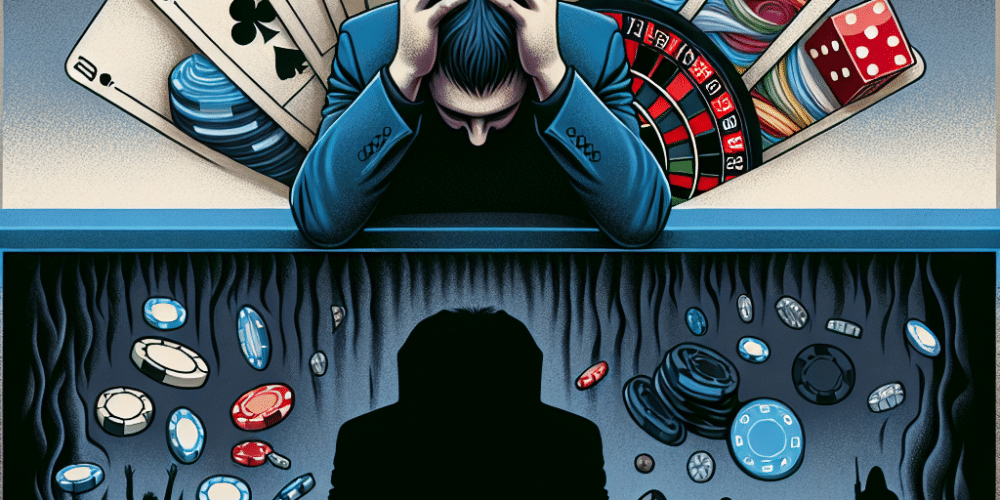
A recent study conducted by Swansea University has revealed a significant link between gambling disorders and increased suicide rates among individuals suffering from gambling-related harm. This connection is notably more pronounced compared to the general population.
The comprehensive research, published in BJPsych Open, stands out as the first to utilize extensive NHS data specifically to investigate this issue, attempting to understand the extent to which individuals with gambling-related harm are disadvantaged in terms of end-of-life decisions.
The research spanned over 30 years, from 1993 to 2023, providing a robust historical and contemporary sample. Researchers carefully analyzed 92 individuals who had both a gambling disorder and had died by suicide, comparing them to 2,990 other individuals who died from different causes.
Professor Simon Daymond, Director of the Gambling Research, Education and Treatment Center at Swansea University, emphasized the gravity of the findings. He noted that nearly half of adults globally reported engaging in gambling activities over the past year, framing gambling-related harm as an escalating public health issue. Despite this, no prior study had investigated the relationship between gambling diagnoses and mental health service utilization in the months before suicide deaths.
The study uncovered that individuals with a gambling disorder who died by suicide had frequent interactions with healthcare professionals, including numerous hospital admissions. Professor Daymond suggested that these interactions might serve as early indicators of deeper, underlying issues that, if addressed timely, could prevent the most tragic outcomes.
Gambling disorders, the research demonstrated, are a stronger predictor of suicide risk than other mental health issues such as depression, schizophrenia, or alcohol abuse. This underscores the critical need to address gambling disorders with the seriousness they deserve.
“It was found that a gambling diagnosis indicates a unique risk for suicide, surpassing other mental health conditions. Yet, the irony lies in the fact that help-seeking behaviors for gambling issues remain persistently low. Not everyone in need receives a diagnosis, suggesting that the patterns observed likely underestimate the true scale of harm associated with gambling and its link to suicide,” Professor Daymond explained.
A crucial aspect highlighted by the study is the potential for using linked healthcare records to identify individuals at risk of suicide. This approach offers a pathway for early intervention, potentially saving lives in the future.
However, there are differing views on the matter. Some experts argue that while gambling disorders are indeed a significant factor, they often coexist with other mental health issues, complicating the picture. They caution against oversimplifying the problem by focusing solely on gambling, asserting that a broader view of mental health and societal factors is essential.
Furthermore, critics point out the need for improved public health strategies that not only address gambling disorders but also the social determinants of health, which can exacerbate the vulnerability of individuals with such disorders. They argue for integrated mental health interventions that consider the complex interplay of various factors contributing to suicide risk.
In recent years, the gambling industry has faced increasing scrutiny over its role in public health. With the growth of online gambling platforms and more accessible betting opportunities, the potential for harm has amplified. This study further fuels the ongoing debate about the responsibilities of gambling companies in mitigating harm and the need for more stringent regulations.
Industry representatives, on the other hand, often highlight efforts to promote responsible gambling and the resources available for individuals seeking help. They advocate for a balanced approach that considers both individual responsibility and systemic support.
This study by Swansea University thus marks a pivotal contribution to understanding the relationship between gambling disorders and suicide. It calls for more comprehensive public health policies, increased awareness, and better support systems for individuals struggling with gambling-related harm.
As the conversation around mental health and gambling continues to evolve, this research underscores the urgent need for targeted interventions and the importance of recognizing gambling disorders as a critical public health challenge.

David Garato is a luminary in gaming journalism, renowned for peeling back the curtain on the gaming world with his witty and insightful commentary. A decade into weaving stories from the pixelated edges of indie games to the expansive universes of AAA titles, David’s work is a thrilling blend of analysis and adventure. When not writing, he’s live-streaming, sharing his gaming exploits with an engaged and growing audience. David doesn’t just write about games; he lives them, making him a trusted guide in the gaming community.