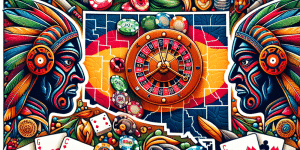


A recent study, co-authored by Randall Akee from UCLA Luskin School, highlights how tribal casinos have significantly improved the economic conditions for American Indians. Casino operations have boosted wages and living standards on reservations, largely through profit distributions that offer financial support to tribal members.
Significant findings indicate a remarkable 46.5% increase in real per capita income for American Indians residing on reservations, a stark contrast to the 7.8% rise for the broader United States population. This improvement is attributed to casino revenues which have been reinvested into local economies, infrastructure, and job creation. Additionally, some tribes have chosen to distribute casino profits directly to members through unconditional cash transfers, enhancing their economic security.
These cash-transfer programs serve as a form of universal basic income, providing consistent financial support regardless of the recipient’s location. Such initiatives are among the earliest examples of universal basic income in the U.S. and have played a crucial role in uplifting tribal communities.
The Indian Gaming Regulatory Act (IGRA) of 1988 was a pivotal moment for tribal economies. Before its enactment, gaming on tribal lands was limited to small-scale operations like bingo halls. IGRA authorized larger gaming enterprises, significantly increasing the number of tribal casinos from almost none in the late 1980s to nearly 600 by 2019. This shift mandated that revenue from these casinos be directed towards tribal economic development and community welfare, including supporting local charities.
In the two decades following IGRA, notable social improvements were recorded. Childhood poverty on reservations decreased by about 11%, and the participation of American Indian women in the workforce increased by 7%, more than double the national increase of 3%. Unemployment in tribal communities fell by 4%, while the national rate showed little change. Today, tribal casinos are a $40 billion industry, a testament to their economic impact.
Despite these advances, challenges remain. The American Indian poverty rate stood at 19.6% in 2024, still higher than the national average of 12.1%. This highlights the ongoing need for economic development and targeted interventions to further narrow the disparity.
Critics argue that while casinos have brought economic benefits, they may not address deeper systemic issues within tribal communities. The reliance on gaming revenue can also expose tribes to economic vulnerabilities, should the industry face downturns. However, proponents of tribal gaming emphasize the positive changes, asserting that casinos provide essential resources and opportunities previously unavailable to many tribal nations.
Further investment in education, healthcare, and sustainable economic practices is necessary to ensure long-term prosperity for tribal communities. The debate continues on how best to leverage the success of tribal casinos to achieve broader socioeconomic goals.
In conclusion, tribal casinos have been a transformative force for American Indian economies, driving significant income growth and improvements in living standards. However, as the industry continues to evolve, so must the strategies employed to ensure that these benefits are sustained and equitably distributed among all tribal members. As one community leader might put it, the journey is ongoing, and while much has been achieved, the work is far from complete.

Garry Sputnim is a seasoned journalist and storyteller with over a decade of experience in the trenches of global news. With a keen eye for uncovering stories that resonate, Alex has reported from over 30 countries, bringing light to untold narratives and the human faces behind the headlines. Specializing in investigative journalism, Garry has a knack for technology and social justice issues, weaving compelling narratives that bridge tech and humanity. Outside the newsroom, Garry is an avid rock climber and podcast host, exploring stories of resilience and innovation.