

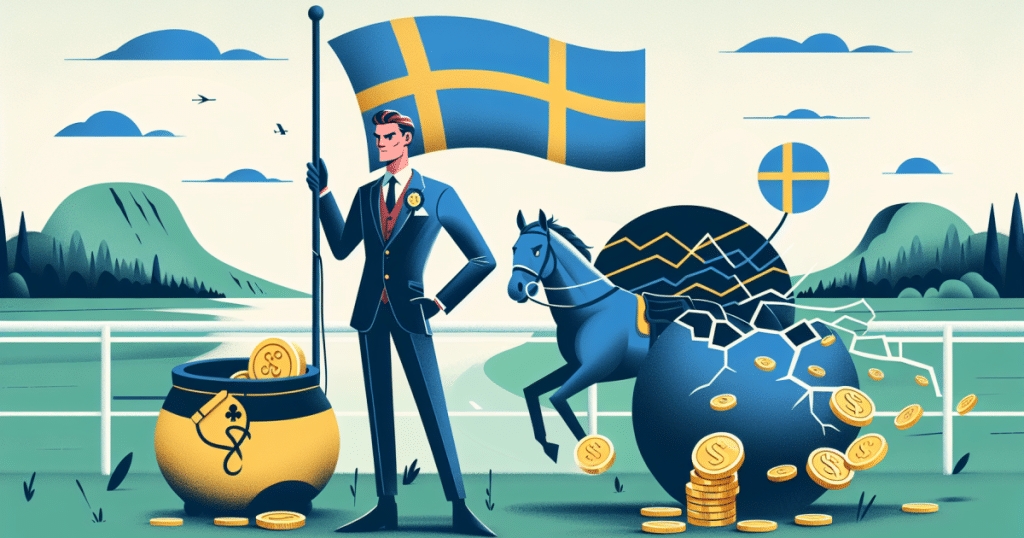
In December 2025, the UK government announced a sweeping reform in its gambling tax system, which notably exempted horse racing betting from increased taxes. This decision has become the subject of admiration from Hasse Lord Skarplöth, CEO of the Swedish horse racing betting operator AB Trav och Galopp (ATG), who is now calling for similar changes in Sweden.
Under the UK’s new tax regime, which will take effect starting in April 2026, the Remote Gaming Duty for online casino gambling will increase from 21% to 40%, while the remote general betting duty is set to rise from 15% to 25% by April 2027. However, horse racing betting has been spared from these hikes, a move that Skarplöth deems both bold and insightful. He has long argued that Sweden should adopt a differentiated approach to gambling taxation, similar to that of the UK.
Historically, Sweden’s approach to gambling taxation has been uniform, increasing the tax to 22% for all forms of gambling in July 2024. Skarplöth has criticized this blanket policy as unfair, emphasizing that online casinos are linked to higher risks and societal costs, while horse racing contributes significantly to the broader economy and cultural heritage. For instance, the horse racing industry in Sweden involves about 350,000 horses and provides nearly 40,000 jobs, reinforcing its substantial economic and cultural impact.
To address what he sees as an imbalance, Skarplöth proposes a revised tax structure where the rate for horse racing betting should be reduced to 18%, and that for online casinos raised to 26%. He believes this adjustment would better reflect the social benefits and risks associated with each type of gambling.
“The UK’s decision highlights the necessity of a targeted approach to gambling taxation, one that addresses risk and societal contribution. It’s a model that acknowledges horse racing as a vital industry while recognizing the potential harms of online gambling,” Skarplöth explained in a recent blog post. “The UK has recognized that a nuanced policy, rather than a one-size-fits-all approach, is essential for sustainable industry growth and societal welfare.”
Skarplöth warns that the current tax policy in Sweden has already led to a reduction in ATG’s contribution to the horse racing sector by SEK 200 million (approximately $18.4 million) annually. He stresses that if Sweden continues with an undifferentiated tax strategy, it risks undermining an industry that plays a crucial role in the country’s economy and culture.
The UK’s decision can be seen as part of a broader trend where governments are increasingly tailoring their gambling policies to address specific societal needs and risks. By shifting the tax burden onto sectors of gambling deemed more harmful, such as rapid online gaming, the UK aims to mitigate gambling-related problems while preserving industries that offer broader economic benefits.
Nevertheless, adopting the UK model in Sweden is not without challenges. Some critics argue that altering tax rates could lead to decreased government revenue from gambling, especially if higher taxes on online casinos lead to reduced participation or encourage players to seek lower-taxed alternatives. There is also the risk that unequal taxation might be perceived as favoritism or could be challenged legally by sectors facing higher taxes.
Despite these potential pitfalls, Skarplöth remains adamant that a differentiated tax policy is crucial for the health of the Swedish gambling industry. “We must choose between pretending all gambling activities are alike or implementing taxes reflecting their actual risks and benefits,” he noted. “A more equitable tax environment would not only safeguard consumer interests but also restore confidence within the horse racing industry.”
The call for reform comes amid a global reevaluation of gambling taxation and regulation, with various countries exploring ways to protect consumers while ensuring the sustainability of gambling-related industries. As governments continue to navigate these complex issues, Sweden faces the same pivotal decision that confronted the UK: whether to adopt a tailored approach that differentiates between the distinct impacts of various gambling activities.
By learning from the UK’s example, Skarplöth hopes that Sweden can strike a balance that protects vulnerable consumers, supports cultural and economic contributions from horse racing, and ensures the long-term viability of its gambling sector. As the debate continues, Sweden must weigh the potential benefits of reforming its tax policy against the risks and ensure that any changes promote a fair and prosperous gambling environment.