
In a strategic move to bolster its presence in East Peoria, Illinois, Boyd Gaming has unveiled plans to replace its existing riverboat casino with a modern structure that still complies with Illinois’ regulations for riverboat casinos. The proposed new facility aims to blend traditional casino amenities with compliance requirements by incorporating a 1000-gallon water basin fed by the Illinois River beneath the building’s foundation.
Currently, Boyd Gaming operates the Par-A-Dice Casino, which is literally housed on a riverboat, with a nearby land-based hotel. Their latest proposal suggests replacing the aging riverboat with a more conventional building, while still adhering to state laws that mandate casinos be situated “upon any water within the State of Illinois.” This legal stipulation dates back to the early 1990s when Illinois, like many other states, permitted riverboat casinos as a way to introduce gambling without passing full land-based casino legislation.
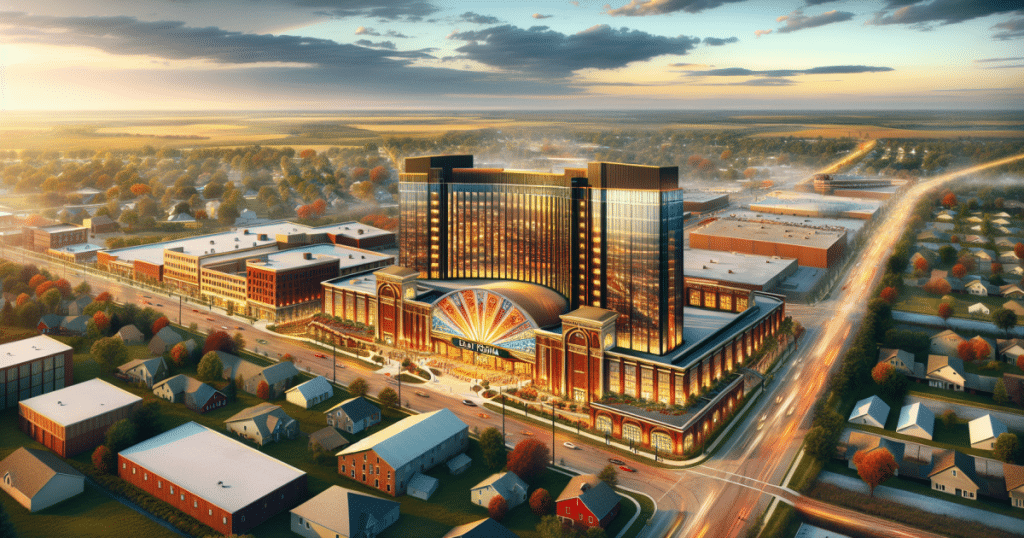
According to the proposal, the new casino will be constructed adjacent to the south side of the existing Par-A-Dice Hotel. It will feature a 29,000-square-foot area dedicated to gaming, complemented by a 20,000-square-foot space for meetings and events, alongside a steakhouse and pub. Such facilities are designed to attract not just gamblers but also business gatherings and tourists, thus potentially increasing foot traffic and boosting local economic activity.
One of the key motivations behind this development is Boyd Gaming’s need to address the declining revenues of the Par-A-Dice Casino. Over the past twenty years, the casino has struggled to maintain its financial performance, prompting the operator to seek innovative ways to rejuvenate its offerings. The new construction aims to attract a wider audience by offering a more diverse range of services, in line with modern consumer expectations.
If approved, Boyd’s approach of integrating a water basin to comply with the riverboat casino classification could set a precedent for similar establishments in Illinois and potentially in other states with comparable regulations. This innovative take on the riverboat concept could inspire other operators to adapt creatively to legal constraints while modernizing their facilities.
However, the ambitious project does come with its share of risks. The primary challenge Boyd may face is whether the new casino will indeed draw enough patrons to justify the investment. The gambling industry has seen fluctuating interest due to various factors, including economic downturns and increased competition from online gambling platforms. Additionally, while the new casino could rejuvenate the local gambling scene, there is no guarantee that it will capture a significant market share or reverse the decline in revenues experienced by the Par-A-Dice Casino.
Historical perspective shows that riverboat casinos emerged as a compromise between lawmakers and the gaming industry, allowing states to capitalize on gambling revenues without fully embracing land-based casinos. This model was particularly popular in the Midwest in the late 20th century. However, as the gaming industry evolves and consumer preferences shift towards more comprehensive entertainment experiences, traditional riverboat casinos face growing challenges.
Illinois itself has been a focal point for gambling expansion, with recent legislative efforts to increase the number of casinos and diversify their locations. In 2019, the state passed a significant gambling expansion bill that allowed for new casinos, sports betting, and racetracks, reflecting a broader trend toward embracing gambling as a source of revenue.
While Boyd Gaming’s proposal is a bold attempt to navigate regulatory waters while modernizing their offering, the company must also be mindful of the economic landscape. The Midwest has seen varying degrees of success with gambling initiatives, and the introduction of new facilities does not inherently guarantee an upswing in tourism or local spending.
Furthermore, there is a social dimension to consider. Communities often express concerns over the potential negative impacts of gambling, such as increased problem gambling and its associated social issues. Boyd Gaming will need to engage with local stakeholders to address these concerns and ensure the project benefits the East Peoria community as a whole.
In conclusion, Boyd Gaming’s proposal to construct a new casino in East Peoria represents both an opportunity and a challenge. By creatively adhering to legal definitions while aiming to modernize its offerings, Boyd is poised to potentially revitalize the local gambling industry. However, balancing these ambitions with economic realities and community expectations will be crucial to the project’s success. The outcome of this endeavor could influence future developments in Illinois’ gaming landscape and set a benchmark for how traditional casino models can evolve within regulatory frameworks.

David Harrison stands tall in gambling journalism, marrying his firsthand casino experiences with a deep understanding of betting psychology. His articles transform complex gambling jargon into engaging tales of strategy and chance, making the world of betting accessible and enjoyable. David’s knack for narrative extends beyond print, making him a sought-after speaker on gambling trends and future bets. In the realm of gambling, David is both a scholar and a storyteller, captivating readers and listeners alike.