

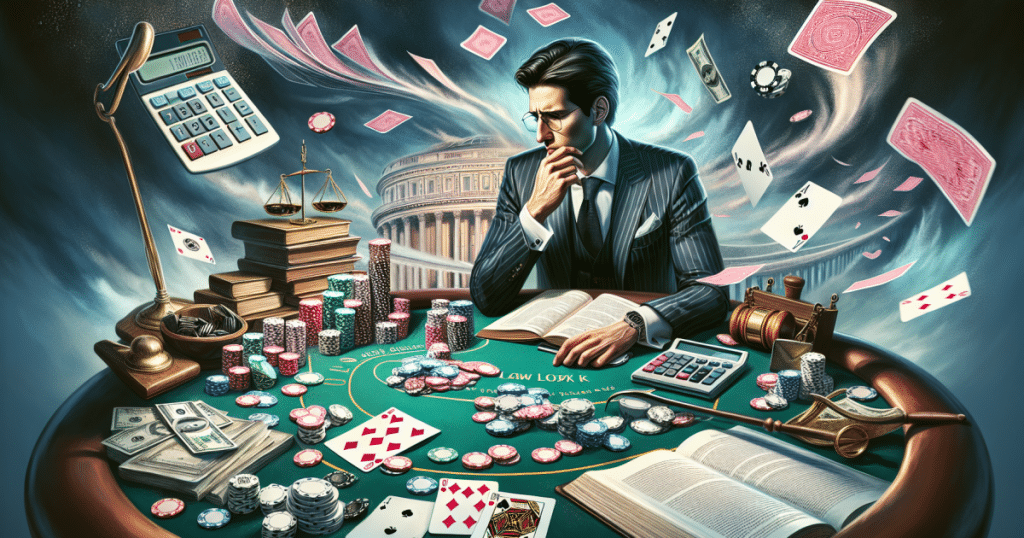
Veteran poker professional Erik Seidel, known for his strategic prowess and poise at the table, is contemplating a partial retreat from the game due to the recent gambling tax reforms introduced by the Trump administration. The changes, which are designed to increase federal revenue through more stringent tax collection on gambling winnings, could significantly impact Seidel’s career and the broader poker community.
The new policy, enacted at the start of 2025, imposes higher tax rates on gambling winnings, affecting both professional and recreational players. For seasoned professionals like Seidel, whose career spans over three decades with more than $37 million in live tournament earnings, these changes present a formidable challenge. The revised tax law increases the withholding tax rate on poker winnings from 25% to 30%, a substantial hike that threatens the profitability of high-stakes poker games.
Seidel’s concerns are echoed by many in the poker world who fear that these tax reforms could diminish the allure of professional poker. Historically, poker has been an attractive career for those with the skill and discipline to thrive in high-pressure environments. However, with the increased tax burden, even the most successful players may find it difficult to justify the risks involved.
The poker legend expressed his apprehension in an exclusive interview, stating that the increased taxation reduces the incentive to participate in major tournaments, as the potential returns do not match the heightened financial risks. Seidel also highlighted the broader implications for the poker ecosystem, suggesting that the new policy might deter new entrants, which could lead to a decline in tournament participation and prize pools.
To understand the impact of these tax changes, it is essential to consider the broader context. The U.S. poker boom in the early 2000s, spurred by the World Series of Poker and the proliferation of online platforms, created a golden age for players like Seidel. However, recent years have seen increased regulation and scrutiny on gambling activities, partly due to concerns about financial transparency and money laundering. The current administration’s focus on boosting federal income through taxes on gambling is part of a wider strategy to address budget deficits.
While the intent behind the policy is to secure additional revenue for federal projects, critics argue that it might drive poker enthusiasts to less regulated markets or even push the activity underground. Some players might seek tournaments in countries with more favorable tax regimes, such as the UK, where gambling winnings are not taxed. This could result in a migration of talent and capital away from the United States, negatively impacting local poker economies and associated businesses.
Additionally, the new tax law could disproportionately affect upcoming players who are still trying to establish themselves. For them, the increased financial burden might be unsustainable, reducing the diversity and dynamism within the poker world. The fear is that only those who have already amassed significant wealth, like Seidel, will be able to continue playing at a high level, thus stifling innovation and competition.
Adding further complexity to the issue is the possibility of states implementing their own gambling taxes, as seen in states like New Jersey and Nevada. These state-level taxes can compound the federal rates, creating an even more challenging environment for players. The double taxation could discourage participation in live events held in the United States, driving more players to international competitions.
A counterpoint to the concerns raised is the argument that the tax increase could lead to more responsible gambling behaviors. Higher taxes might encourage players to be more discerning with their stakes, focusing on skill development and strategy rather than sheer volume of play. Moreover, proponents believe that the additional revenue could be channeled into programs supporting gambling addiction prevention and education, thus benefiting society in the long run.
Nevertheless, the uncertainty surrounding the sustainability of professional poker in the United States has left many players reevaluating their options. Seidel himself has hinted at the possibility of scaling back his participation in live tournaments, perhaps focusing more on other ventures within the poker industry or exploring new business opportunities outside of gambling.
The potential shift in Seidel’s career marks a significant moment for the poker community, given his status as one of the game’s most respected figures. His decisions may influence other players facing similar dilemmas, potentially reshaping the professional poker landscape.
In conclusion, the recent tax reforms represent a pivotal juncture for poker professionals in the United States. As the community grapples with these changes, the future of poker in America remains uncertain. Whether the allure of the game can withstand these financial challenges, or if new opportunities will emerge in response, remains to be seen. Regardless, the poker world is at a crossroads, facing the dual challenges of maintaining its competitive edge while adapting to an evolving regulatory environment.

David Garato is a luminary in gaming journalism, renowned for peeling back the curtain on the gaming world with his witty and insightful commentary. A decade into weaving stories from the pixelated edges of indie games to the expansive universes of AAA titles, David’s work is a thrilling blend of analysis and adventure. When not writing, he’s live-streaming, sharing his gaming exploits with an engaged and growing audience. David doesn’t just write about games; he lives them, making him a trusted guide in the gaming community.