

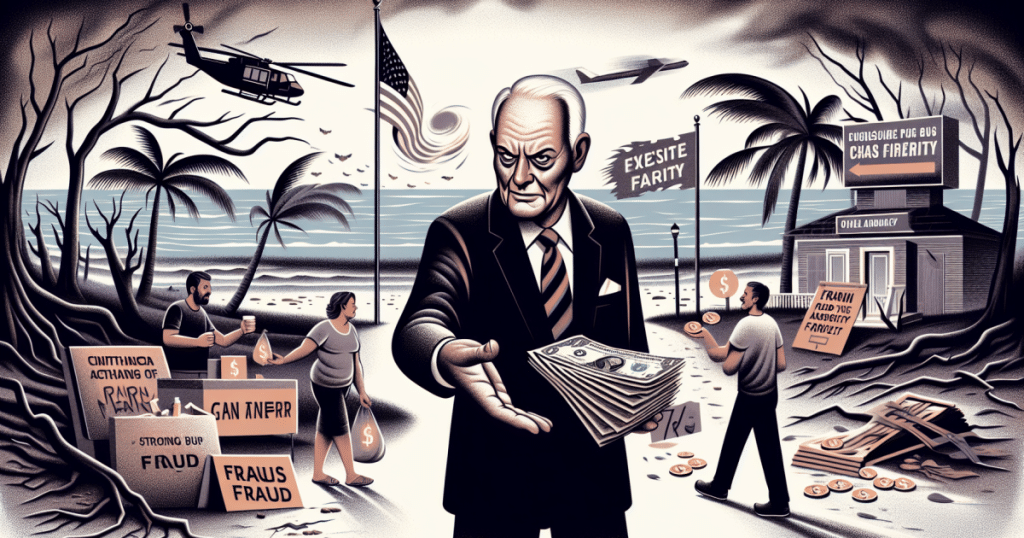
Authorities in Florida have apprehended a man accused of orchestrating a fraudulent scheme that exploited elderly residents in the aftermath of Hurricane Milton. The suspect’s activities reportedly left numerous individuals without their savings and without the promised repairs, highlighting a significant issue in regulatory oversight during disaster recovery. The Manatee County Sheriff’s Office disclosed that a considerable portion of the funds was allegedly diverted to support the suspect’s gambling habit.
The accused, identified as B.M., was arrested for operating under the guise of RedFin Construction, a company he allegedly used to deceive homeowners. He now faces 13 felony charges, accused of manipulating storm-related vulnerabilities among residents to extract substantial upfront payments for construction services that were never intended to be delivered. The primary focus of his alleged scheme was Seabreeze Mobile Home Park, a community hard-hit by hurricane damage. The investigation, which commenced in July 2025, uncovered a pattern of complaints that eventually led to the uncovering of B.M.’s alleged activities.
Michael Carpenter, a detective with the Manatee County Sheriff’s Office, reported identifying 14 victims ranging in age from 62 to 95. The victims purportedly paid B.M. a total of approximately $222,000 for aluminum repairs that remained unfinished. Despite some evidence of purchases related to construction materials, these were never used to carry out the projects for which they were intended.
Further scrutiny revealed that B.M. was not a licensed contractor in Florida, complicating compliance within the construction and disaster-recovery sectors. Evidence suggests he unlawfully utilized another company’s credentials to conduct business, muddying the regulatory waters further. Documents, including bank statements, contracts, and canceled checks, illustrated B.M.’s consistent practice of coaxing victims into making substantial upfront payments amidst their displacement and storm-induced distress.
The case against B.M. highlights a persistent issue of gambling-related crime, with prosecutors alleging that he transferred funds into various personal and business accounts, misusing $53,000 of the victims’ money at casinos while also supporting his living expenses. He is currently facing charges including defrauding over $50,000, misappropriating construction funds exceeding $100,000, and committing aggravated white-collar crime against elderly victims. Each of these charges carries serious legal ramifications.
This incident contributes to ongoing reports of gambling-related financial crimes in the United States. It follows a case in Virginia where a police officer admitted to defrauding friends and acquaintances of more than $800,000 to fuel his gambling addiction. Such cases underscore the broader societal impacts of gambling addiction, which extend beyond direct financial loss to victims, illustrating the potential for individuals to resort to illegal activities to sustain their habits.
Experts suggest that the increase in gambling-related harm across the U.S. is a growing concern, with studies by the University of Maryland indicating a correlation between the expansion of betting opportunities and rising rates of addiction and bankruptcy. The scenarios demonstrated in both Florida and Virginia highlight how financial pressures from compulsive gambling can drive individuals towards deceptive practices, severely impacting those around them, particularly vulnerable groups such as the elderly.
Moving forward, the regulatory bodies in Florida and beyond face the challenge of tightening controls to prevent similar fraud in disaster recovery scenarios. Monitoring compliance and licensing in the construction sector, especially in post-disaster contexts, will be crucial. As the legal process unfolds, attention will also be directed towards the handling of B.M.’s case and the broader implications for gambling-related crime prevention and consumer protection. The response of the market and regulatory systems to these developments will be pivotal in shaping future strategies for safeguarding vulnerable populations against such fraudulent activities.