
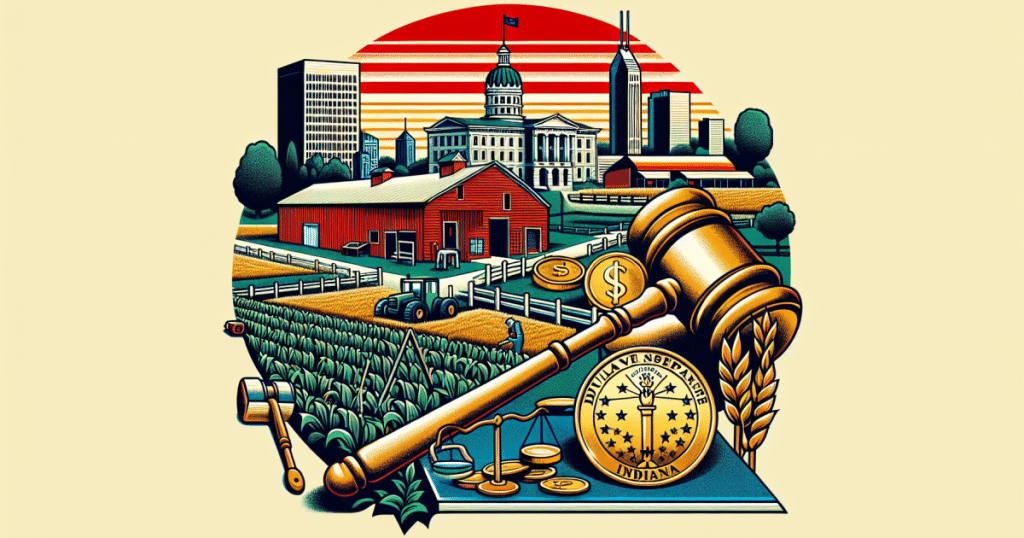
In a significant legislative move, Indiana state representative Ethan Manning has introduced a bill aimed at banning online sweepstakes casinos that use dual-currency systems. Filed under HB 1052, the proposed legislation targets platforms that allow virtual currencies to be exchanged for cash, adding to a growing trend across the United States to regulate or eliminate such gaming models.
HB 1052 aims to amend existing laws to make dual-currency sweepstakes illegal, setting a new precedent in Indiana’s approach to online gambling. The bill outlines specific fines for violations, stipulating a $100 penalty for each infraction involving the operation or facilitation of these sweepstakes. This decisive action follows Manning’s earlier attempt to legalize iGaming in the state, an effort that sought to bring online casinos under the regulatory umbrella of the Indiana Gaming Commission. His iGaming proposal would have required online platforms to partner with established brick-and-mortar casinos in the state, a move that was ultimately unsuccessful.
This legislative push comes amid a broader national crackdown on sweepstakes casinos. Recent months have seen a number of states, including New York and California, implement bans on dual-currency sweepstakes, reflecting increasing concerns about the potential for these platforms to skirt traditional gambling regulations. States such as Connecticut, Idaho, Montana, New Jersey, and Washington have also enacted similar prohibitions. Meanwhile, companies like Chumba, Stake, and WOW Vegas face growing scrutiny as more states demand a halt to their operations.
The bill defines a sweepstakes as an online game, contest, or promotion that involves the use of dual-currency systems where one currency can be exchanged for real money or something of equivalent value. By targeting operators who knowingly engage in these activities, the bill seeks to dismantle a model that many argue operates in a legal grey area. However, it stops short of introducing additional penalties beyond the specified fines.
Sweepstakes casinos often utilize two types of virtual currencies, allowing users to purchase one type with real money and potentially convert winnings back into cash. This model has come under fire for resembling traditional gambling, triggering regulatory efforts across various jurisdictions. Notably, platforms using these systems have also faced challenges from tech giants like Google, which recently updated its advertising policies to exclude sweepstakes casinos from promoting themselves as social games.
The introduction of HB 1052 highlights the escalating debate surrounding the legitimacy and regulation of online gaming models. Critics argue that dual-currency sweepstakes exploit loopholes in gambling laws, effectively enabling unregulated gambling activities. By offering monetary rewards through games, these platforms blur the lines between gaming and gambling, raising ethical and legal concerns.
Supporters of the bill argue that it will protect consumers from potentially predatory practices. They contend that by circumventing established gambling regulations, sweepstakes casinos expose players to risks without the safeguards provided by regulated gambling environments. In defense of such measures, proponents point to instances where players have incurred significant financial losses under the guise of participating in seemingly innocuous online games.
However, not everyone agrees that sweeping bans are the right approach. Opponents of HB 1052 caution against overly restrictive legislation that could stifle innovation in the gaming industry. They argue that with proper regulation and oversight, dual-currency models could be integrated into the legal gambling landscape, providing a new revenue stream for states and a secure environment for players. Policymakers are called upon to consider a balanced approach that addresses the risks without eliminating opportunities for growth and development in the sector.
As Indiana debates the future of online sweepstakes casinos, it joins a broader national conversation about the role of governance in the rapidly evolving digital gaming space. The outcome of this legislative effort could set a precedent for how other states address the complexities of online and virtual currency gaming in the coming years.
For context, the gambling industry continues to be a significant economic contributor in various states, with nationwide revenue reaching over $53 billion in 2021, according to industry reports. This growth has been fueled by the expansion of online gaming and sports betting, pushing lawmakers to grapple with the dual objectives of fostering economic gains while ensuring consumer protection.
In light of these developments, it’s essential to consider the potential unintended consequences of such prohibitions. Should HB 1052 pass, it could drive players to unregulated offshore platforms, compounding the very issues the legislation seeks to address. This highlights the delicate balance between regulation and accessibility that states must navigate as they chart the future of online gambling within their jurisdictions.
As Indiana’s legislative session begins, all eyes will be on how these debates unfold and what implications they may have for the national landscape of online gaming. The decisions made here will not only impact local players and companies but could also influence policy decisions well beyond state lines.