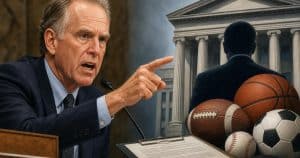


Kalshi is under increasing scrutiny as Nevada and California take legal action against the prediction market platform. The Nevada Gaming Control Board has petitioned the state’s First Judicial District Court to hold Kalshi in contempt for flouting a court order issued on April 3. The order requires Kalshi to prevent users in Nevada from participating in trades involving sports, entertainment, and election contracts. Kalshi’s failure to comply with the board’s amended order from May 18 could result in daily penalties of at least $120,000, according to court documents. While Kalshi has attempted to restrict service to Nevada users by blocking their IP addresses, Nevada authorities argue this is insufficient compared to more strong geofencing techniques used across the US gambling industry.
In This News
California Ramps Up Legal Campaign
California’s Attorney General, Rob Bonta, has joined a coalition of 37 attorneys general in filing an amicus brief against Kalshi in a case pending in the US Court of Appeals for the Sixth Circuit. The amicus brief supports Ohio’s legal stance against prediction markets, arguing that federal loopholes should not undermine state jurisdiction over gambling. Bonta has highlighted the need to prevent federal commodities laws from being misused to evade state gambling regulations. And although California itself hasn’t filed a lawsuit against prediction markets directly, gaming tribes in the state have previously attempted legal action against Kalshi, citing federal regulatory infractions.
Political Stakes for State Attorneys General
The legal maneuvers against Kalshi are intertwined with the political ambitions of key players in both states. Nevada Attorney General Aaron Ford, involved in the Kalshi prosecution, is campaigning to become the state’s first black governor. A successful case against Kalshi, seen as a threat to Nevada’s vast casino industry, could bolster Ford’s gubernatorial campaign amidst a competitive election climate. Meanwhile, Bonta, seeking reelection in California, has aligned himself with influential gaming tribes through various regulatory efforts. Tribal casinos remain a major economic force, generating $12.1 billion in gross gaming revenue in 2024 across California and northern Nevada.
Unresolved Implications and Industry Response
As the legal battle unfolds, several questions remain unanswered—chief among them, whether Kalshi will implement more strong geofencing measures. Industry insiders note this isn’t the first time Kalshi has faced regulatory hurdles, signaling a broader pattern of contention with state authorities. Kalshi, for its part, claims compliance with court orders and disputes the Nevada Gaming Control Board’s allegations of technological inadequacy. “If there were genuine concerns, they’d offer details to address the issue,” wrote Kalshi spokesperson Jacki McGavick on social platform X. Resolution may hinge on both the legal outcomes and the company’s willingness to adapt its practices to meet state requirements. Kalshi’s legal path will likely become clearer in the coming months, as the Nevada court considers contempt charges and the Sixth Circuit addresses the wider regulatory implications.

Garry Sputnim is a seasoned journalist and storyteller with over a decade of experience in the trenches of global news. With a keen eye for uncovering stories that resonate, Alex has reported from over 30 countries, bringing light to untold narratives and the human faces behind the headlines. Specializing in investigative journalism, Garry has a knack for technology and social justice issues, weaving compelling narratives that bridge tech and humanity. Outside the newsroom, Garry is an avid rock climber and podcast host, exploring stories of resilience and innovation.