

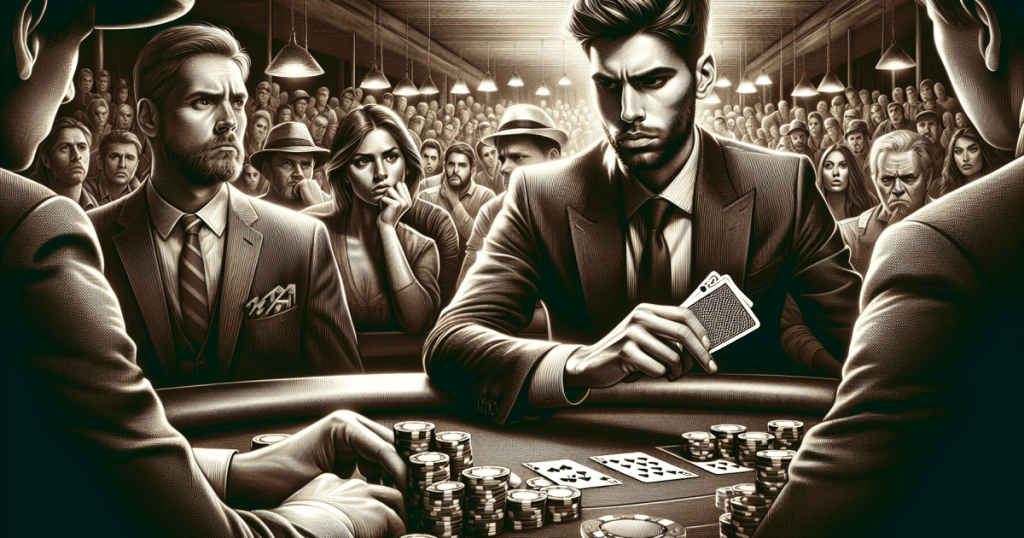
During the World Series of Poker (WSOP) Super Main Event on December 12, 2025, poker players and fans witnessed an intense moment when Italian pro Mustapha Kanit made a decisive move against Martin Kabrhel. The event unfolded at a critical juncture in the game, with high stakes and palpable tension. As the players faced off, Kanit, known for his strategic acumen and psychological insight, seized the opportunity to turn the tide against Kabrhel, whose tactics had already caused ripples of controversy among the participants.
Kabrhel, a seasoned player hailing from the Czech Republic, is no stranger to attention at the poker table, often known for his unorthodox and sometimes contentious playing style. During this particular session, Kabrhel engaged in what many perceived as prolonged stalling or “tanking” — a tactic where a player takes excessive time to make a decision in a bid to unsettle opponents. This strategy, although within the rules, can disrupt the flow of the game and potentially frustrate other players.
Amidst a swirl of poker chips and rising tensions, Kanit responded by calling the floor, a decision that effectively halted the game and brought official attention to Kabrhel’s conduct. The intervention was significant, underscoring the fine line between permissible strategy and perceived gamesmanship. Kabrhel’s style, while controversial, also reflects a broader trend in competitive poker where psychological tactics are increasingly employed to gain an edge.
The WSOP, an annual event that draws thousands of players from around the globe, serves as a showcase of both skill and strategy. Known for its rich history since its inception in 1970, the series has evolved into a multi-faceted event that mirrors the growth of poker as a global phenomenon. This year, the Super Main Event attracted a diverse pool of competitors, each vying for their share of the substantial prize pool and the prestige of a WSOP bracelet.
Kanit’s response to Kabrhel’s tactics highlights an ongoing debate within the poker community regarding the ethics and limits of psychological maneuvering. While some argue that mind games are an inherent part of poker’s allure, others contend that excessive tactics such as tanking can undermine the competitive integrity of the sport. This clash of perspectives is emblematic of the broader discourse on fair play and gamesmanship.
The incident also underscores the importance of tournament officials in maintaining the balance between strategic play and fair competition. By calling the floor, Kanit not only addressed Kabrhel’s conduct but also reaffirmed the role of officials in adjudicating disputes and ensuring that all players adhere to the spirit as well as the letter of the rules.
In the broader context of poker history, controversies over player conduct are not new. Throughout the years, the sport has witnessed its share of disputes, particularly as the stakes and global audience have grown. In 2009, for example, a similar situation occurred during the European Poker Tour when a player was penalized for disruptive behavior, leading to heightened scrutiny over playing ethics. Such incidents have prompted organizers to refine rules and enforcement to preserve the integrity of the game.
However, not everyone agrees with the intervention. Critics argue that such actions could stifle creativity and discourage players from employing diverse strategies that make poker compelling. They fear that too much regulation could transform the face of competitive poker, moving it away from a psychological duel into a more mechanical exercise.
Despite the controversy, Kanit’s performance in the tournament reflects his ability to adapt and respond to the dynamics of high-stakes competition. His strategic prowess, combined with a keen sense of timing, enabled him to navigate the psychological and strategic complexities that define the upper echelons of poker. As the tournament progressed, Kanit’s decisive play further cemented his reputation as a formidable competitor on the world stage.
Kanit’s action against Kabrhel also underscores the broader trend of professional players increasingly advocating for clarity and consistency in tournament regulations. The call for a more standardized approach aims to ensure that all players, regardless of their style, compete on an even playing field. This push towards uniformity is seen as crucial for the continued growth and professionalism of poker as a sport.
In conclusion, the clash between Mustapha Kanit and Martin Kabrhel at the WSOP Super Main Event highlights the dynamic and sometimes contentious nature of competitive poker. As players push the boundaries of strategy and psychology, the poker community faces ongoing challenges in balancing innovation with integrity. This incident serves as a reminder of the complexities that characterize the sport and the ongoing efforts to uphold fairness and respect within the game. As poker continues to capture the imagination of players and fans alike, maintaining a delicate equilibrium between creativity and structure remains essential for its future.

David Garato is a luminary in gaming journalism, renowned for peeling back the curtain on the gaming world with his witty and insightful commentary. A decade into weaving stories from the pixelated edges of indie games to the expansive universes of AAA titles, David’s work is a thrilling blend of analysis and adventure. When not writing, he’s live-streaming, sharing his gaming exploits with an engaged and growing audience. David doesn’t just write about games; he lives them, making him a trusted guide in the gaming community.