

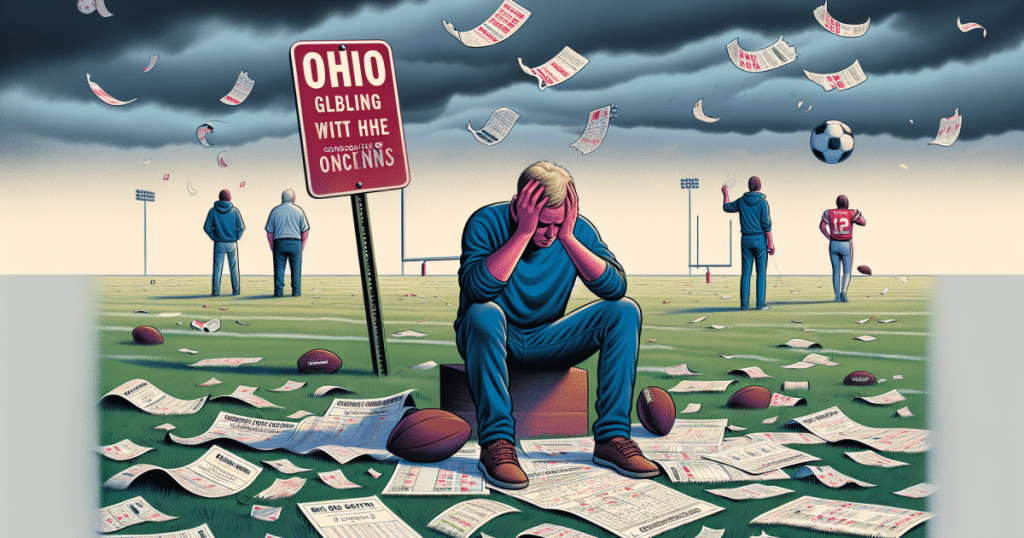
As Ohio approaches the second anniversary of its decision to legalize online sports betting, the state finds itself at a crossroads. Initially hailed as a promising new source of tax revenue and economic growth, the industry is now under intense scrutiny. The backlash from health experts, lawmakers, and citizens highlights the unforeseen social costs that have accompanied the expansion of this controversial market.
In January 2023, Ohio rolled out its online sports betting platform amid much fanfare, including celebrity endorsements and government assurances of fiscal benefits. However, recent evidence suggests that the negative impact on public welfare could outweigh these perceived gains. According to Kelley Breidigan, an assistant clinical professor at Ohio State’s College of Social Work, the spike in gambling addiction and financial distress is evident, as people flock to treatment centers in record numbers.
Data from UCLA supports Breidigan’s concerns, indicating a troubling correlation between legalized sports betting and increased financial instability. The studies reveal that average credit scores in states with mobile wagering have significantly dropped as more individuals grapple with rising debt and financial stress. Bankruptcy filings and loan defaults have surged, underscoring the detrimental effects of easy access to online gambling.
Ohio’s statistics paint a similarly concerning picture. Within the first month of legal sports betting, gambling-related inquiries to the United Way of Greater Cleveland’s helpline skyrocketed by 277% compared to the previous year. State authorities estimate that roughly 255,000 residents currently exhibit signs of gambling addiction—a figure that has sparked alarm among policymakers.
Adding to the growing unease, recent sports scandals have further tarnished public perception of gambling. High-profile incidents, such as the involvement of two Cleveland Guardians pitchers in a Major League Baseball betting scandal, have prompted a reevaluation of the industry’s influence. Governor Mike DeWine, who initially signed the legislation, has voiced regret over the decision amid these controversies. In response, MLB has implemented bans on micro and prop bets, which are frequently cited as particularly problematic.
Breidigan emphasizes the role of aggressive marketing in perpetuating the issue. Slick advertising campaigns featuring celebrities have glamorized betting, presenting it as an integral part of sports fandom. This deceptive image creates a false sense of security, leading many individuals to underestimate the risks until they are already in financial peril. The convenience of placing bets via smartphones only exacerbates the problem, making it dangerously easy for people to engage in gambling.
Despite the enthusiasm that initially surrounded the launch of online sports betting in Ohio, it is clear that resistance is mounting. Proposals to introduce online gaming, or iGaming, in the state have already faced staunch opposition from health and religious organizations, resulting in the collapse of recent bills. This pushback signals a shift in public sentiment as more communities become aware of the social implications associated with gambling.
Historically, gambling has been a divisive issue in the United States. While some states have embraced it as a means to boost revenue, others have resisted due to the moral and ethical concerns it raises. The market size for sports betting in the U.S. was estimated at over $61 billion in 2023, highlighting its significant economic footprint. Nonetheless, as Ohio’s experience demonstrates, the financial benefits can be overshadowed by the social costs.
A critical counterpoint to the concerns raised is the potential for effective regulation to mitigate the negative impacts of legalized sports betting. Proponents argue that with tighter oversight, including stricter advertising guidelines and enhanced support for addiction treatment, it is possible to balance economic gains with social responsibility. Additionally, tax revenue from gambling could be allocated to fund public health initiatives, providing a direct benefit to communities.
However, the risk remains that without significant reforms, the gambling industry’s aggressive expansion will continue to outpace regulatory efforts. As Ohio navigates this complex landscape, the state must weigh the allure of economic growth against the imperative of protecting its citizens’ well-being. The coming years will be crucial in determining whether Ohio can chart a sustainable path forward amid the evolving attitudes toward gambling.