
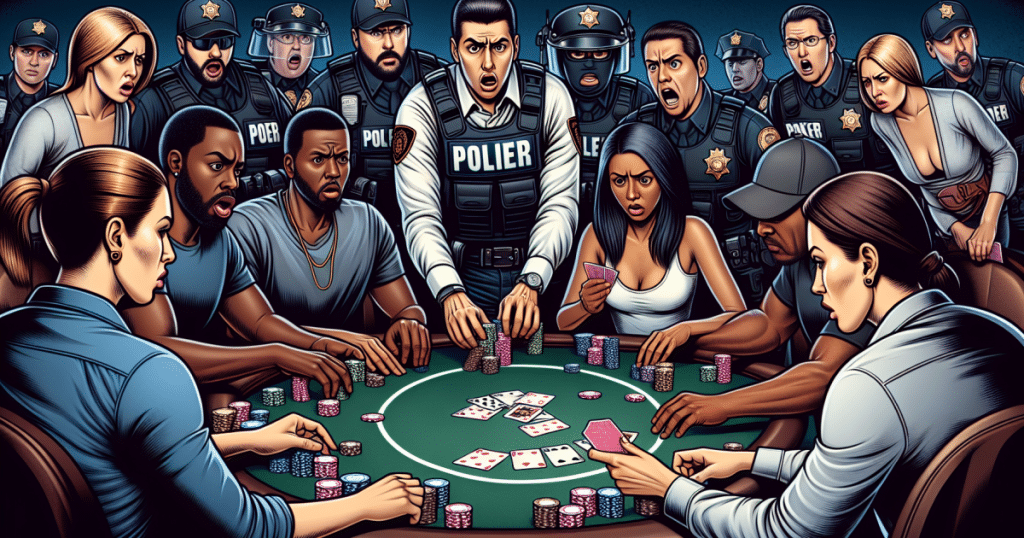
In an unexpected turn of events, a SWAT team disrupted a €100 poker tournament in Frankfurt on December 3, 2025, raising questions about the legal status of certain poker games in Germany. While poker is widely played and enjoyed globally, its legality often varies due to regional regulations and interpretations of gambling laws. This incident shines a spotlight on the often murky distinction between a friendly game of poker and illegal gambling operations.
The police intervention occurred after authorities received reports suggesting that the tournament was not sanctioned and was potentially violating local gambling laws. This particular event was organized at a private venue, drawing in over a hundred participants eager to test their skills and luck. However, what was meant to be a day of competition ended abruptly as law enforcement officers detained the organizers and seized gaming equipment.
Central to the controversy is the debate over whether poker is a game of skill or chance, a long-standing discussion that influences its classification in legal terms. In Germany, the legal framework is complex, with poker often falling into a gray area unless specifically regulated by state authorities. This ambiguity contributes to uncertainty around what counts as a lawful game, leading to incidents like the recent raid.
Globally, poker is recognized as a strategic game, with major tournaments televised and celebrated as professional sporting events. Nations such as the United States have intricate laws governing poker, with certain states allowing it while others restrict it to government-sanctioned casinos. In contrast, countries like the United Kingdom have more liberal approaches, permitting both online and offline poker games under regulated conditions.
Despite its global popularity, poker’s legality is not the only issue at stake. There are broader societal implications, including potential risks of addiction and financial loss, which often prompt stringent regulations. Critics argue that unauthorized games can lead to unregulated gambling, which lacks safeguards for players and can be a gateway to more significant legal and social problems.
Maurice Hawkins, a well-known figure in the poker community, found himself embroiled in a separate altercation at a different poker event. Known for his competitive spirit and charisma at the table, Hawkins has a reputation for being outspoken. During a heated moment at a high-stakes game, tensions escalated, leading to a physical confrontation with another player. This incident further fuels discussions about the conduct and professionalism expected in poker circles.
Hawkins’ altercation is not isolated; it echoes a trend where high-pressure environments in poker can sometimes lead to conflicts. Such incidents highlight the need for better conflict resolution mechanisms and more stringent codes of conduct to maintain the sport’s integrity. While poker is a game that demands psychological prowess, self-control is equally paramount.
The broader context of these events points to an evolving landscape in the world of poker. As the game continues to grow in popularity, the challenges of regulation, player conduct, and the public’s perception of poker as a legitimate sport become more pronounced. There is a pressing need for clear guidelines and international cooperation to ensure the game’s growth aligns with legal standards while safeguarding players’ interests.
In recent years, various countries have taken steps to update their gambling laws to accommodate the changing dynamics of poker and other games of chance. For instance, Spain and Italy have revised their laws to allow more freedom for poker tournaments, provided they adhere to strict regulatory oversight. Such measures aim to strike a balance between promoting the sport and protecting participants from potential pitfalls.
On the other hand, the risks associated with improperly regulated games cannot be ignored. Without proper oversight, there is a danger of fostering environments where cheating, rigging, and other unethical practices can flourish. Moreover, unlicensed games can deprive the government of tax revenues and fail to offer the player protections found in regulated venues.
As the poker community reflects on these recent incidents, there is also room for optimism. The heightened awareness and dialogue about the game’s legal and ethical dimensions might drive positive changes. Industry stakeholders, including players, organizers, and regulators, have an opportunity to collaborate on crafting a more transparent and fair framework that benefits everyone involved.
In conclusion, the disruption of the poker tournament in Frankfurt and Maurice Hawkins’ altercation underscore the multifaceted challenges facing the poker industry today. As legal battles and regulatory updates unfold, the poker world watches closely, hoping for resolutions that respect the game’s rich strategic nature while ensuring it adheres to modern legal and ethical standards. The road ahead involves not just adapting to these challenges but also embracing the opportunities they present for the future of poker.

David Garato is a luminary in gaming journalism, renowned for peeling back the curtain on the gaming world with his witty and insightful commentary. A decade into weaving stories from the pixelated edges of indie games to the expansive universes of AAA titles, David’s work is a thrilling blend of analysis and adventure. When not writing, he’s live-streaming, sharing his gaming exploits with an engaged and growing audience. David doesn’t just write about games; he lives them, making him a trusted guide in the gaming community.