

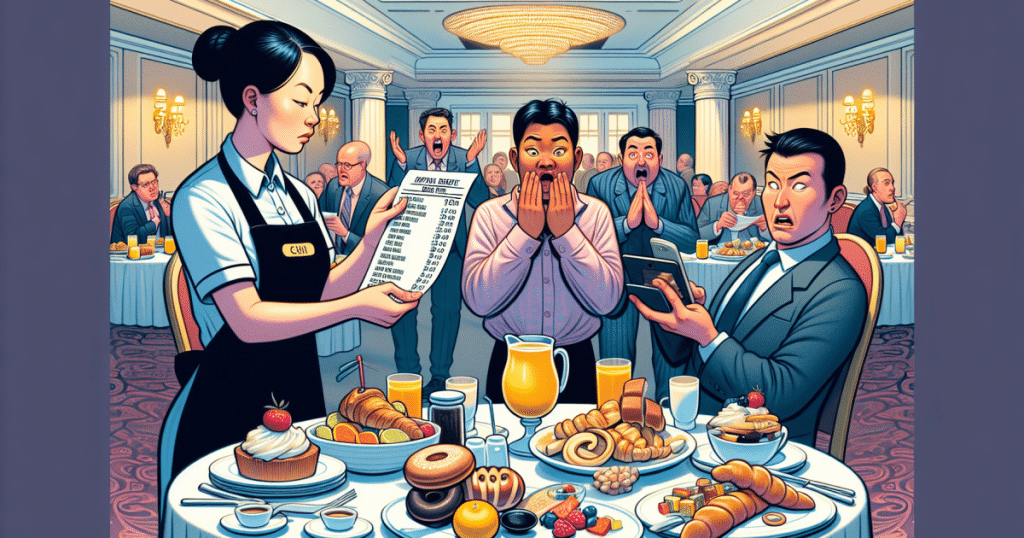
In December 2025, a guest staying at the Cosmopolitan Hotel in Las Vegas found themselves at the center of an online storm after their breakfast bill totaled a staggering $142.05. The controversy arose not just from the high cost but from the unexpected charges added to their room service order.
The guest ordered a simple breakfast of Buttermilk scratch pancakes, French toast, and an American breakfast. While the food itself was priced at a hefty $89, with the American breakfast alone costing $40, it was the additional charges that caught the most attention. An automatic gratuity of $16.02 and a $10 “Traditional Room Service Upgrade” were added to the bill. Unaware that the gratuity was already included, the guest tipped an additional 22%, adding $19.58. The final bill was further inflated by a tax of $7.45.
The guest posted a photo of the receipt on the subreddit “Mildly Infuriating,” sparking widespread outrage online. The post quickly gained traction and was shared on various social media platforms, including Facebook and X, where it garnered hundreds of comments from users sharing their own experiences of unexpected fees during their travels. The post highlighted a common frustration among many travelers who encounter hidden costs and automatic gratuities without prior notice.
Las Vegas is known for its vibrant hospitality industry, and tipping has long been ingrained in the city’s culture. Typical gratuity rates range from 15% to 20%, often reflecting the wide range of dining options available. However, the recent downturn in the Las Vegas hospitality sector has led to increased fees across many establishments as they try to recover their losses. Some industry observers suggest that these additional charges are being used as a lifeline to compensate for lower revenues.
Over the years, Las Vegas has attracted millions of tourists, with the hospitality industry acting as a major economic driver. However, the city’s recent economic challenges have forced hotels and restaurants to rethink their pricing strategies. The introduction of automatic gratuities and service fees is seen by some as a necessary adjustment to maintain profitability. Nonetheless, such measures have not come without backlash, with many customers feeling blindsided by the lack of transparency.
The Cosmopolitan Hotel and other similar establishments argue that these fees ensure that staff are adequately compensated, especially in a city where service is a critical part of the guest experience. However, the practice of automatically adding gratuities and additional fees without clear communication can lead to double tipping, as seen in this case, where the guest unknowingly tipped twice, exacerbating the cost.
Mandatory gratuities are not unique to Las Vegas. In many countries, service charges are customary and often included in the bill to prevent staff from being underpaid. However, in places like the United States, where tipping is usually discretionary, mandatory service charges can be controversial. Transparency is key to avoiding customer dissatisfaction, and many argue that clear communication about these fees should be mandated.
The recent incident has renewed discussions about the tipping culture in Las Vegas and beyond. Should gratuities be automatically included, or should they remain an optional display of appreciation for good service? This question remains hotly debated, with strong opinions on both sides.
One risk of these added charges is that they could deter tourists from choosing Las Vegas as a destination. In a competitive market where travelers have multiple options, the perception of unfair or hidden fees can easily sway decision-making. Other cities and tourist destinations might capitalize on such discontent by offering clearer pricing structures to attract visitors.
Despite the controversy, the Cosmopolitan Hotel has remained silent on this particular incident. It is not uncommon for high-end hotels to adopt similar practices, but the backlash might push some to reconsider how these fees are communicated to guests. In an era of increased consumer awareness and demand for transparency, businesses in the hospitality sector may need to adapt.
While the debate over mandatory fees and tipping continues, one thing is clear: clear communication with guests is crucial. As travelers become more discerning and vocal about their experiences, especially through social media, businesses must ensure that their pricing structures are clear and justifiable. The hospitality industry in Las Vegas and elsewhere will need to strike a balance between maintaining profitability and ensuring guest satisfaction.
In conclusion, the breakfast bill controversy at the Cosmopolitan Hotel has not only highlighted issues with automatic gratuities and service charges but also sparked a broader conversation about transparency and fairness in the hospitality industry. The response to such charges will likely shape future practices, as businesses strive to align with evolving customer expectations in an ever-changing market.

Garry Sputnim is a seasoned journalist and storyteller with over a decade of experience in the trenches of global news. With a keen eye for uncovering stories that resonate, Alex has reported from over 30 countries, bringing light to untold narratives and the human faces behind the headlines. Specializing in investigative journalism, Garry has a knack for technology and social justice issues, weaving compelling narratives that bridge tech and humanity. Outside the newsroom, Garry is an avid rock climber and podcast host, exploring stories of resilience and innovation.