
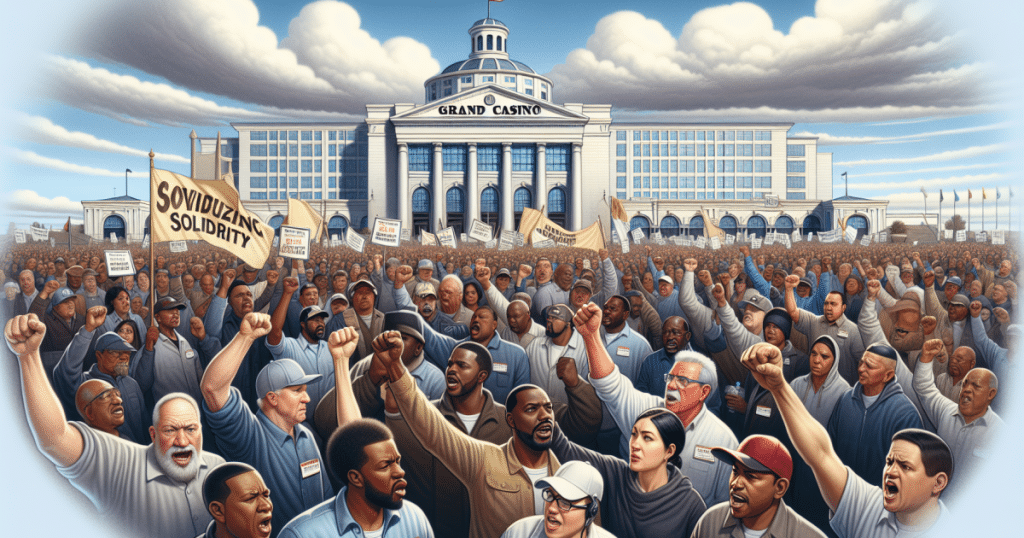
On December 2, 2025, the United Auto Workers (UAW) joined employees at Hard Rock Casino Rockford in a demonstration aimed at bolstering efforts to unionize. This unionization drive, a significant move for casino workers, seeks approval from the National Labor Relations Board (NLRB).
The initiative is primarily driven by sportsbook cashiers, dealers, and other personnel at the casino, motivated by the example set by slot attendants earlier this year. In February, these attendants successfully voted to join Teamsters Local 325, achieving an overwhelming 98% approval rate. The latest rally is a pivotal moment as employees await a critical decision from the NLRB, which was actively deliberating on the matter during the protest.
John Mann, a participant in the rally, expressed concerns about management’s approach to its workforce. He remarked that workers are treated more as numerical entries rather than as individuals, a sentiment echoed by many in similar large organizations. He emphasized the role of unions in maintaining a balance of power in workplaces, stating that they are essential to protect employees from spontaneous managerial decisions that may not consider the workforce’s welfare.
Michael Moe of Local 1268 revealed that Hard Rock Casino Rockford employees have been seeking unionization since 2024. Over the past year, considerable efforts have been made to unify the workforce under the UAW banner. The proposed unionization is expected to offer tangible benefits such as improved holiday pay and other monetary advantages. Moe pointed out that currently, employees do not receive additional compensation for holiday work, and those who miss holidays face double penalties. Union membership could rectify these issues, ensuring fair treatment and compensation.
Historically, unionization efforts within the gaming industry have seen varied outcomes. While some casinos have embraced unions, acknowledging the stability they can bring, others have resisted, citing concerns over operational flexibility. In the broader context, unions have played a critical role in advocating for worker rights, particularly in industries where employees often face irregular hours and high job demands.
The current push for unionization encompasses around 125 employees, who stand to gain not only from joining the UAW but also from enhanced collective bargaining power. Effective collective bargaining can lead to more favorable working conditions and influence greater changes within the workplace management structure. Advocates argue that such changes are vital for workers to truly benefit from the corporation’s successes.
John Mann believes that unions are key to keeping the American dream alive, allowing workers to thrive irrespective of their position in the corporate hierarchy. He notes that unions have a vested interest in ensuring employee success, which in turn contributes to the company’s overall prosperity. With the potential unionization, employees could have a more substantial voice in workplace decisions, a facet Mann stresses is currently lacking.
However, the journey toward unionization is not without risks and opposition. Critics of unionization argue that it can lead to increased labor costs and reduced managerial flexibility, potentially impacting the business’s competitiveness and profitability. For instance, businesses might find it challenging to adapt quickly to market changes if constrained by union-negotiated contracts.
In the gambling industry, where market dynamics can shift rapidly, maintaining a balance between employee rights and business agility is crucial. The debate surrounding unionization at Hard Rock Casino Rockford reflects broader themes seen in many sectors: the struggle to harmonize worker welfare with business efficiency.
As the employees of Hard Rock Casino Rockford await the NLRB’s decision, the outcome could influence similar efforts across the country. The casino workers’ move to unionize not only represents a local initiative but also signals a broader trend of labor organizing within the hospitality and gaming industries. The support from a well-established union like the UAW underscores the significance of this movement and its potential impact on labor relations within the industry.
Looking ahead, the decision will likely set a precedent for other casino workers contemplating unionization. If successful, it could encourage more workers in the industry to follow suit, prompting a wave of unionization efforts that alter the labor landscape in casinos nationwide. Conversely, a decision against unionization could stall these efforts, highlighting the ongoing challenges faced by workers seeking to organize in traditionally non-union sectors.
Ultimately, the unfolding events at Hard Rock Casino Rockford could have far-reaching implications, not just for the employees involved, but for the future of labor relations in the gaming industry as a whole. As the discussion continues, the balance between advancing employee rights and maintaining business competitiveness remains at the forefront of the industry’s labor discourse.

David Garato is a luminary in gaming journalism, renowned for peeling back the curtain on the gaming world with his witty and insightful commentary. A decade into weaving stories from the pixelated edges of indie games to the expansive universes of AAA titles, David’s work is a thrilling blend of analysis and adventure. When not writing, he’s live-streaming, sharing his gaming exploits with an engaged and growing audience. David doesn’t just write about games; he lives them, making him a trusted guide in the gaming community.