

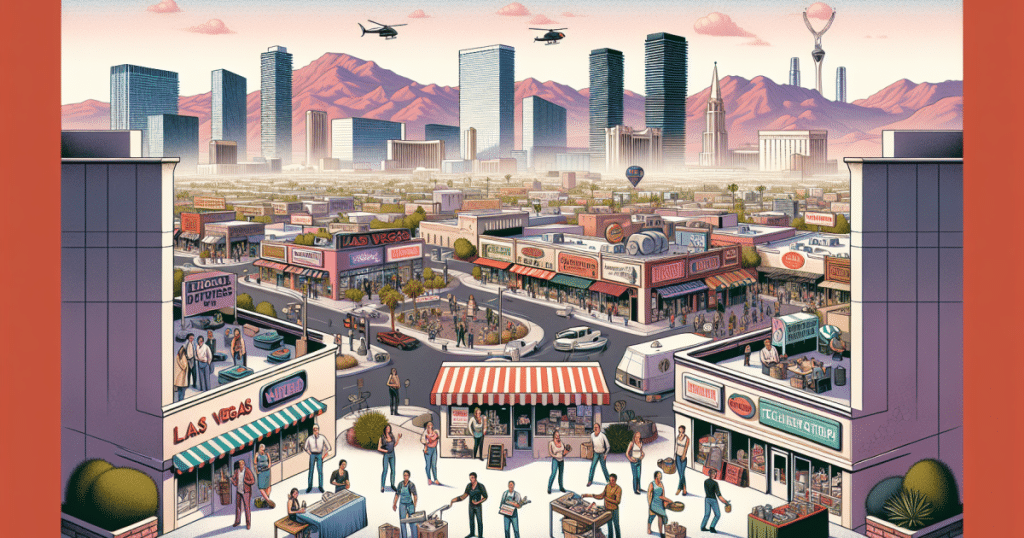
In September, Las Vegas added 4,400 jobs, marking a 0.4% increase in employment, according to a report by the Department of Employment, Training, and Rehabilitation. This growth suggests that economic recovery may be on the horizon for the city, even as the tourism sector faces challenges. The hospitality industry in Nevada played a significant role in this uptick, contributing 5,100 new positions statewide.
Despite this positive development in job creation, there is a backdrop of uncertainty. The UNLV’s Center for Business and Economic Research has flagged low consumer confidence in Southern Nevada, the lowest since the Great Recession. This pervasive cautiousness among consumers casts a shadow over the region’s economic outlook.
Visitor numbers help frame the scope of the challenge. In October, Las Vegas saw a 4.4% decline in tourists compared to the same month in the previous year. By the end of October, the city had attracted 32.3 million visitors, a 7.6% decrease from 2024. These figures highlight the ongoing struggle for Las Vegas to regain its pre-pandemic allure.
Contextualizing this downturn, Las Vegas is grappling with broader global trends affecting the travel and leisure industries. The city, long reliant on tourism, is navigating these shifts as consumer travel preferences evolve post-pandemic. Historically, Las Vegas has been a resilient hub, bouncing back from economic slowdowns by leveraging its appeal as a world-renowned entertainment destination. However, the current environment presents a new set of challenges as shifting travel norms intersect with economic pressures.
A temporary boost came during the Thanksgiving holiday, which brought a surge in visitor numbers. AAA Vice President of Travel, Stacey Barber, noted that Thanksgiving traditionally sees increased travel as people visit family and friends. This spike offered some relief to local businesses, providing a short-term infusion of cash flow.
However, there are risks to this recovery narrative. While the job market’s resilience is a positive indicator, it may not fully compensate for the downturn in tourism. The city’s economy is heavily intertwined with visitor spending, and a prolonged decline in tourist numbers could stifle the broader economic growth.
Adding to the complexity, Las Vegas must also consider broader economic headwinds, such as inflation and fluctuating global travel restrictions. These factors could impact consumer behavior and discretionary spending, crucial elements for a city built on entertainment and leisure.
Furthermore, there is an ongoing debate about the sustainability of the city’s economic model, which has traditionally depended on attracting large numbers of visitors. Some experts suggest that Las Vegas may need to diversify its economic base to ensure long-term stability. This could involve investing in sectors beyond tourism, such as technology and renewable energy, to create a more balanced economic ecosystem.
In comparison, other tourism-dependent regions are also reevaluating their strategies. For instance, cities like Orlando and New York, which suffered significant tourist declines during the pandemic, are exploring innovative approaches to attract visitors, such as leveraging digital experiences and expanding domestic tourism options.
To counteract the negative trends, Las Vegas might consider similar strategies. Emphasizing digital and personalized visitor experiences could attract a new demographic of tourists. The city could also focus on enhancing its appeal to domestic travelers, a market segment that has shown resilience during periods of global uncertainty.
In conclusion, while Las Vegas is making strides in job creation, the city faces a complex interplay of factors that could influence its economic recovery. Balancing job growth with innovative tourism strategies will be crucial as Las Vegas navigates this uncertain landscape. The city’s resilience and adaptability will be key in shaping its future trajectory, ensuring it remains a vibrant and dynamic destination despite current challenges.