
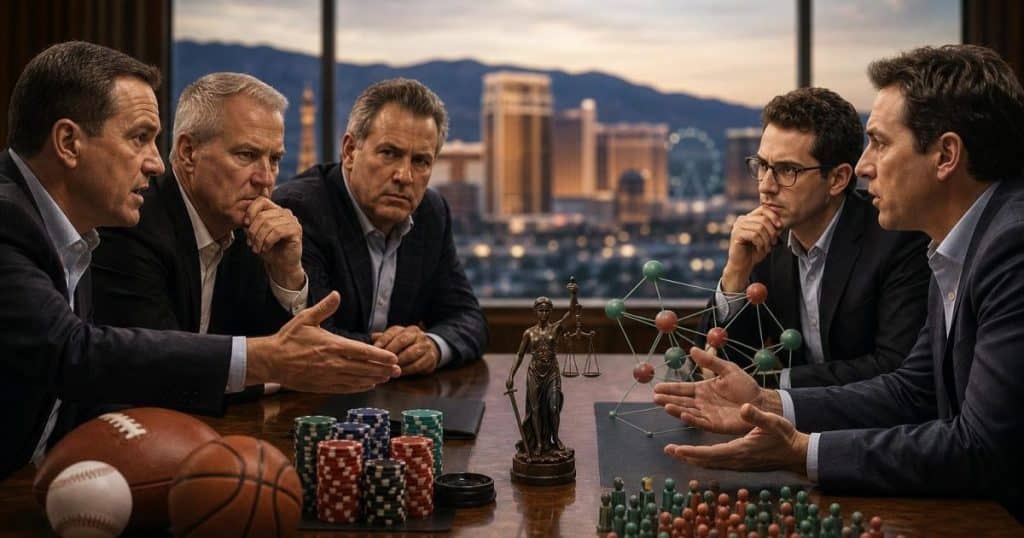
Nevada’s casino industry brass pushed back on prediction markets during a regulatory meeting this week, arguing that platforms like Kalshi are undermining the state’s gaming model. The state has been embroiled in a lawsuit to prevent these markets from offering sports event contracts locally, emphasizing this isn’t about protecting legacy operators but rather enforcing gaming laws. The tension is high—Nevada’s clear that prediction markets shouldn’t operate there without a gaming license.
In This News
Concerns Over Betting Volume Impact
Boomer’s Sportsbook CEO Joe Asher and Caesars Digital President Eric Hession voiced concerns at the Nevada Gaming Control Board meeting, pointing out a $249 million drop in sportsbook handle year-over-year. Hession noted, “At a high level, it has to be impacting us from a volume perspective.” Though revenue isn’t heavily impacted yet, the potential threat to their business models is evident. Nevada’s operators argue that if a product mimics sports betting and targets game outcomes, it shouldn’t bypass the state’s regulations. This position reflects a wider industry sentiment that prediction markets, currently with lawsuits across the U.S., exploit a loophole rather than form a distinct category.
Legal Struggles Against Kalshi and Others
Nevada has aggressively pursued legal action against Kalshi, first issuing a cease-and-desist order in March 2025 and then filing a lawsuit to block them from offering unlicensed sports event contracts. A preliminary injunction was secured earlier this year, and Kalshi’s attempts to operate within the state have been repeatedly thwarted by the courts. And just last month, Nevada sought to hold Kalshi in contempt for breaching this injunction. The state’s scrutiny extends beyond Kalshi—another injunction targets Polymarket. From Nevada’s perspective, these platforms engage in gambling without due approval. The state’s actions underscore its commitment to defending its regulatory framework, one of the most stringent in the country.
Economic Implications for Sportsbooks
If prediction markets can operate in states with legal sportsbooks without adhering to the same tax, licensing, and compliance norms, they stand to gain large competitive advantages. And hession highlighted, “They don’t have to pay taxes, they don’t have to comply with regulations, they can target 18-year-olds.” This discrepancy in operational burdens motivates traditional sportsbooks to urge regulators to either shut down or regulate these markets akin to sportsbooks. Nevada serves as a pivotal battleground—its status as a leading gaming jurisdiction means any successful challenge there could undermine the prediction markets’ push for broader acceptance. If they falter in Nevada, their case for legitimacy across other states weakens significantly.
What’s Next in the Legal Fray
The legal dispute is far from over. But the state’s actions against prediction markets are likely to continue, with potential implications for future regulatory frameworks. The next major development could come with a federal court’s decision on Kalshi’s contempt case. Industry stakeholders are watching closely, as the outcome might set a precedent affecting other states considering how to handle similar platforms.

Marcus Chen brings a quantitative approach to poker strategy and sports betting analysis. With a background in data analytics and over eight years covering professional poker circuits, his articles combine statistical insights with practical advice for serious players looking to sharpen their edge at the table.